

A new study led by the Sapkota Lab in collaboration with Harvard’s Woo lab is shedding light on how an emerging class of medicines, designed to eliminate specific harmful proteins in cells, may have broader effects than previously thought.
These treatments, known as degraders, work by adding specific signals on the harmful proteins so that the cell’s natural waste disposal system can recognize the signals on the proteins and remove them.
But scientists have now discovered that the process may not be as precise as it is often believed.
It is known that many proteins do not act alone inside cells, as they frequently operate as part of larger groups, or complexes. This potentially means that when a drug targets a single protein for destruction, it can unintentionally take its partners down with it.
In this study, scientists focused on a protein called CK1α, which controls many important cellular processes. Earlier research from the Sapkota lab showed that a group of proteins called SACK1, act like anchors, holding CK1α in specific places within the cell. By keeping CK1α in the correct locations, these anchors help it carry out specific intended jobs of CK1α effectively.
Scientists found that different CK1α degraders caused degradation of different SACK1 proteins. This collateral damage happens because the targeted protein CK1α is physically linked to SACK1 proteins. Hence when the drugs add degradation signals on CK1α, they also add the signals on its partners, ensuring they are destroyed as well.
The findings highlight both a challenge and an opportunity for drug developers. On one hand, unintended loss of nearby proteins could lead to unwanted side effects. On the other, researchers may be able to design more sophisticated drugs that intentionally remove specific functional protein complexes that are involved in a disease.
As targeted protein degradation continues to develop, understanding these wider effects will be key to making safer and more effective treatments.
The study is published in ACS Chemical Biology and can be accessed here (https://pubs.acs.org/doi/10.1021/acschembio.6c00098)
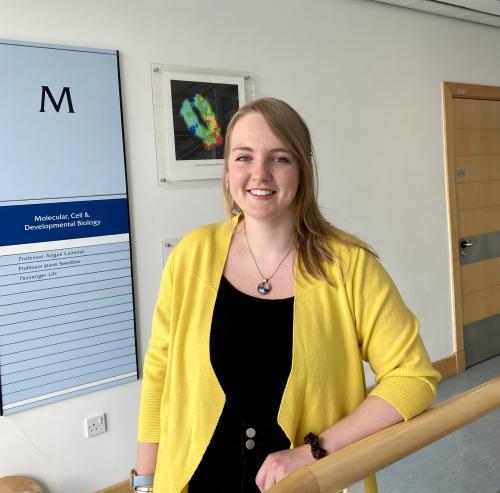
PhD student in the Sapkota lab, Lorraine Glennie, who led the study said, “I think it is apparent that we need to better understand the activity of degraders in cells and exactly how they influence the target protein and its wider cellular context. This is especially important when considering their use in therapeutics. Our study was an excellent collaboration between the Sapkota lab and Woo lab to understand more on this and how the curated design of chemical degraders can translate to diverse and somewhat unexpected cellular effects. I think this invites discussions on really exciting avenues and how we can work towards highly selective context-dependent tools for targeted protein degradation in future.” Dr. Glennie has since received her PhD degree and is currently continuing her postdoctoral research in targeted protein degradation field at the CRUK Scotland Institute. Her current research explores the function and regulation of a poorly characterised p53 mutant in cancer cells, and how this oncogenic protein can be effectively targeted using degraders called proteolysis-targeting chimeras (PROTACs).
PhD student in the Woo lab (Chemistry & Chemical Biology Department, Harvard University), Nicole Curnutt, also contributed substantially to this study. She is investigating how CK1α degradation impacts ovarian and endometrial cancers to explore if CK1α degraders such as those explored in the present study could be harnessed in the clinic for the treatment of gynaecologic cancers.
Professor Gopal Sapkota said, “This was a wonderful collaboration between our lab and Prof. Christina Woo’s lab. Lorraine and Nicole were instrumental in driving the project together! I should also thank Prof. Zoran Rankovic (ICR, London), who also provided us with several CK1α degraders that his team had developed that we also employed in this study.”
Gajanan Sathe, Brune Le Chatelier, Freya Goff, Jin-Feng Zhao, Tyrell Cartwright and Karen Dunbar from the Sapkota lab and Nikki Wood and Tom Macartney from the MRC PPU Reagents and Services (Dundee) also contributed to this study.