

Researchers at the MRC Protein Phosphorylation and Ubiquitylation Unit (MRC PPU) at the University of Dundee have been awarded a series of major international research grants totalling $18 million from the Aligning Science Across Parkinson’s (ASAP) initiativeAligning Science Across Parkinson’s (ASAP) initiative, in partnership with The Michael J. Fox Foundation for Parkinson's Research (MJFF). Through these awards, the research teams will join the Collaborative Research Network (CRN), an international, multidisciplinary, multi-institutional network working to address high-priority research questions about Parkinson’s disease. These grantsThese awards will support collaborative efforts to uncover the molecular mechanisms that drive the development and progression of Parkinson’s disease (PD).
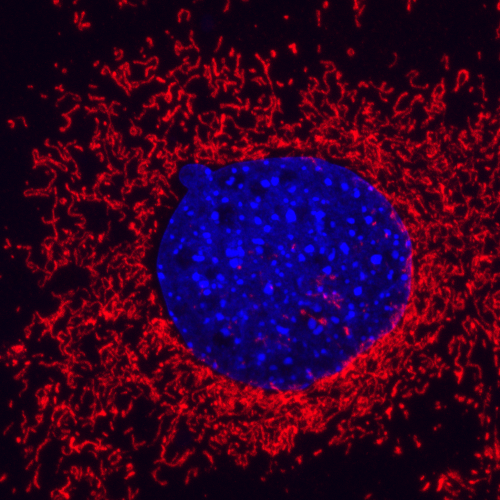
Professor Miratul Muqit and Professor Ian Ganley have received funding to investigate how cellular stress pathways intersect with mitochondrial function to influence Parkinson’s risk. Professor Muqit’s laboratory has made seminal contributions to understanding how mutations in the PINK1 and PRKN genes regulate the removal of damaged mitochondria through mitophagy, while Professor Ganley’s group has pioneered technologies to study mitophagy across relevant brain cell types. Their work has established defective mitophagy as a central pathway in Parkinson’s disease and has contributed to the development of therapeutic strategies now progressing into early-stage clinical trials. Through this award, they will collaborate with leading international partners, including groups at the University ofin Göttingen, Harvard University, and the University of California, Los Angeles.
In parallel, Professor Dario Alessi, Director of the MRC PPU, together with Dr Esther Sammler and Dr Raja Nirujogi, has secured funding to extend pioneering studies on the LRRK2 kinase pathway, anone of the most important genetic drivers of Parkinson’s disease. Over the past two decades, Professor Alessi’s work contributed to defining how LRRK2 mutations cause disease, including the discovery of Rab GTPases as key physiological substrates. Dr. Sammler is a leader in translational LRRK2 research and co-leads the international LRRK2 Investigative Therapeutics Exchange (LITE)LITE initiative and is conducting several clinical trials on LRRK2 inhibitors, while Dr Nirujogi has advanced biomarker discovery through cutting-edge proteomics. Their combined efforts have significantly shaped the field and supported the development of multiple clinical trials targeting LRRK2. This new award builds on a previous ASAP grant and will further strengthen collaborations with leading researchers at Stanford University.
The MRC PPU has become a major international centre for Parkinson’s disease research. These new awards will further enhance Dundee’s role within a global network of laboratories committed to the ASAP principles of collaboration and open science, accelerating the translation of fundamental discoveries into new therapeutic strategies.
Professor Alessi said:
“This success in the ASAP Collaborative Research Network awards is a testament to the outstanding work of our researchers at the MRC-PPU and the strength of our collaborative approach. Our focus has always been on understanding the fundamental ‘nuts and bolts’ of Parkinson’s disease, how key pathways such as PINK1 and LRRK2 regulate organelle quality control at the molecular level. These insights are critical, as they provide the foundation for developing better ways to diagnose and treat the disease. The ASAP initiative programme is particularly powerful in enabling this kind of discovery-driven research, while ensuring that new ideas can be rapidly translated into therapeutic strategies that will ultimately benefit patients.”