

News

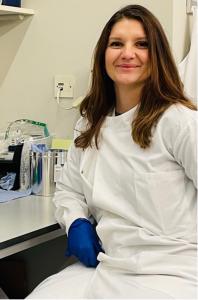
Dr. Mahima Swamy from the Medical Research Council Protein Phosphorylation and Ubiquitylation Unit (MRC-PPU) in the University of Dundee has been chosen to join the prestigious EMBO Young Investigator network, recognizing her as one of the rising stars in biology in Europe.

 …more

Dr Greg Findlay and Professor Satpal Virdee, Principal Investigators in the MRC Protein Phosphorylation and Ubiquitylation Unit, have been awarded Wellcome Discovery Awards. The 8-year funding that totals ~£4.2M will support their research in Intellectual Disability and E3 ligase enzymes, respectively.

 …more

Nick Brewer, Ian Ganley, and Yogesh Kulathu have been promoted to Personal Chair (Professor) as part of the 2022 Annual Review process for academic staff.

Nick Brewer

 …more

On November 7 of this year, the Parkinson’s UK’s leadership team including CEO Caroline Rassell, Deputy director of research Professor David Dexter and the new Scotland director James Jopling visited the Parkinson’s research team at the University of Dundee. In the morning, researchers from Dundee including Professor Dario Alessi, Dr. Paul Davies, Professor Miratul Muqit, Dr.

 …more

Mitochondria and peroxisomes are key eukaryotic metabolic organelles. They perform essential and related roles including fatty acid metabolism and ROS (Reactive Oxygen Species) scavenging.

 …more

Discovered only in 2004, UFM1 is the most recently identified Ubiquitin-like protein. Like ubiquitin, UFM1 is post-translationally attached to proteins via an enzymatic cascade. Ribosomes located at the endoplasmic reticulum, the large molecular machines that carry out protein synthesis, are the main cellular targets of UFM1 attachment.

 …more

Targeted protein degradation has become an exciting new drug modality. Tens of small molecule degraders, including proteolysis-targeting chimeras (PROTACs), have entered clinical trials to treat many different diseases.

 …more

Mutations that increase the kinase activity of LRRK2 cause Parkinson's disease and therapies that reduce LRRK2 kinase activity are being tested in clinical trials.

 …more

Congratulations to Asad Malik (Phd Student) and Athanasios Karapetsas (ex MRC PPU postdoc, now working in AstraZeneca) for their tremendous work that has elucidated the mechanism of activation of the Leucine-rich-repeat-kinase 1 (LRRK1) protein kinase.

 …more

Researchers from the University of Dundee have discovered a small molecule that helps to eliminate a Parkinson’s disease-causing protein.

Parkinson’s disease is a progressive neurodegenerative disorder affecting more than 10 million people worldwide. No cure is available and current treatment is limited to symptomatic management.

 …more